
For commercial truck operators, fleet managers, and owner-operators across Birmingham, AL and the surrounding areas, DOT inspections are one of those topics that can feel like a box-checking exercise — something you do because you have to, not because you want to. But that way of thinking can cost you time, money, and in serious cases, your operating authority.
At Rollin’ Wrench, we’ve worked with hundreds of drivers and fleet operators over the years, and one of the most common conversations we have is about DOT compliance. Too many trucks hit the road with underlying issues that a proper inspection would have caught. Too many operators face surprise citations, costly violations, or even out-of-service orders that could have been avoided entirely with regular, thorough inspection and maintenance.
This guide breaks down what DOT inspections actually cover, why they matter beyond the legal requirement, and how staying ahead of compliance protects your business, your drivers, and your equipment for the long haul.
What Is a DOT Inspection?
A DOT inspection is a standardized roadside examination conducted under the guidelines of the Federal Motor Carrier Safety Administration. These inspections evaluate whether a commercial motor vehicle and its driver meet the minimum safety standards required for legal operation on public roads.
There are multiple levels of DOT inspections, ranging from a full driver and vehicle examination (Level I) to a focused cargo or hazmat inspection (Level V and VI). The most comprehensive is the Level I inspection, which covers the driver’s credentials, hours of service records, and a detailed examination of the vehicle’s mechanical systems including brakes, steering, lights, tires, coupling devices, fuel systems, and frame.
A Level II inspection is a walk-around vehicle and driver check, while a Level III inspection focuses on driver-only factors such as licensing, medical certification, and hours of service compliance. Understanding which type of inspection you may face during a roadside stop — or which type you need before putting a truck into service — helps you prepare your equipment and documentation properly.
What DOT Inspectors Actually Look At
When a roadside inspection officer examines your truck, they are looking at a specific list of components that have been identified as the most critical to safe operation. Brake systems are consistently the number one cause of out-of-service violations, which means brake adjustment, lining condition, and air system performance are always under scrutiny. Lights and electrical systems come next — running lights, brake lights, turn signals, and marker lights must all be functioning correctly at the time of inspection.
Tires are another major focus area. Inspectors check tread depth, sidewall condition, inflation, and whether tires are properly matched on drive axles. Underinflated or worn tires are a common violation that can ground your truck immediately. The steering system, including steering gear, linkage, and wheel bearings, is also examined closely, as is the fuel system for leaks or improperly secured fuel tanks.
For trailers, inspectors look at the integrity of the coupling devices, the condition of the fifth wheel, safety chains, and the trailer’s lighting and brake connections. Cargo securement is examined to ensure that loads are properly anchored and cannot shift or fall during transit.
On the driver side, inspectors check the commercial driver’s license for proper class and endorsements, confirm that the medical examiner’s certificate is current and on file, and review electronic logging device records or paper logs for hours of service violations.
The Real Cost of Failing a DOT Inspection
An out-of-service order is the most immediate consequence of a failed DOT inspection. When a truck or driver is placed out of service, the vehicle cannot move until the violation is corrected and cleared. Depending on where you are when this happens — a remote highway, a job site, or hours from a shop — the situation can quickly become extremely expensive.
Beyond the immediate downtime, DOT violations become part of your safety record through the FMCSA’s Safety Measurement System. This data is publicly accessible and is used to assess carrier safety performance. A poor score can trigger targeted roadside inspections more frequently, affect your ability to contract with certain shippers, and in severe cases, lead to an FMCSA safety audit that threatens your operating authority.
Fines for violations vary, but even a single out-of-service violation can result in hundreds to thousands of dollars in penalties, depending on the severity and whether it is classified as a driver or vehicle violation. When you multiply that across a fleet, or factor in the revenue lost during downtime, the economics of skipping regular compliance inspections become very clear very quickly.
How Preventive Maintenance Connects Directly to DOT Compliance
The trucks that pass DOT inspections consistently are almost always the trucks that are on a regular preventive maintenance schedule. This is not a coincidence — it is a direct result of catching and correcting issues before they become violations or failures.
At Rollin’ Wrench, our fleet maintenance and preventive service is built specifically around this principle. We work with fleet managers and owner-operators across Birmingham and the surrounding areas to develop maintenance schedules that keep every truck in your fleet current on brake servicing, lighting checks, tire inspections, fluid analysis, and all the other components that DOT inspectors examine. When your maintenance is consistent, DOT compliance becomes a natural outcome rather than a source of anxiety.
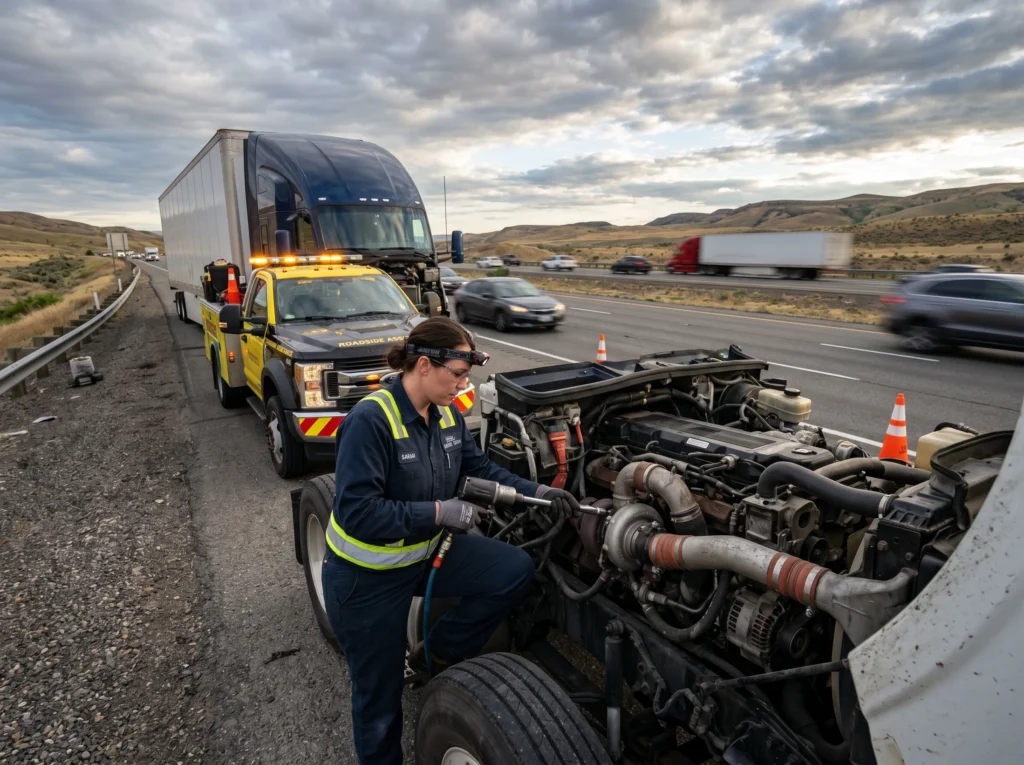
For owner-operators managing their own schedule, the challenge is finding time to prioritize maintenance when you are also responsible for running loads and managing your business. That is exactly why Rollin’ Wrench operates as a fully mobile service — we come to your location, your yard, your job site, wherever your truck is parked, and complete the necessary inspections and maintenance without requiring you to drop your truck at a shop for days at a time.
What Happens During a Rollin’ Wrench DOT Inspection
Our DOT inspection service is a thorough, professional examination performed by certified technicians using the same standards and criteria applied during roadside inspections. We check every category that a roadside officer would examine, including brake performance and adjustment, lighting systems, tire condition and inflation, steering components, fuel system integrity, coupling devices, and trailer connections.
We also review your driver documentation and log requirements with you if requested, helping you understand what you need to have on hand during a roadside stop. After the inspection, we provide a written report that identifies any items that need attention, so you have a clear picture of your truck’s compliance status before it returns to the road.
If we find violations during the inspection, we can repair them on the spot in most cases. This is one of the biggest advantages of working with a mobile repair service rather than simply passing your truck through a quick-check lane at a weigh station. When Rollin’ Wrench finds a brake issue, a lighting problem, or a worn coupling component, our technicians have the tools and parts to fix it immediately, keeping your truck moving and keeping your record clean.
Pre-Trip Inspections: Your Daily Line of Defense
Beyond formal DOT inspections, the pre-trip inspection is the most important daily safety practice for any commercial truck operator. Required by FMCSA regulations before every trip, the pre-trip inspection requires the driver to systematically examine the vehicle for safety defects that could cause an accident or breakdown.
A proper pre-trip inspection takes ten to fifteen minutes when done correctly. It covers the engine compartment, all lights, tires, brakes, mirrors, safety equipment, and trailer connections. Drivers are required to complete a written vehicle inspection report for any defects found and submit it to their carrier.
In practice, pre-trip inspections are sometimes rushed or skipped, especially when drivers are under pressure to hit the road on time. This is understandable, but the consequences can be severe. A defect that could have been caught in the yard can turn into a breakdown on the highway, a roadside citation, or an accident. The few minutes required for a thorough pre-trip inspection are always worth it.
Staying Ahead of DOT Compliance in Alabama
For truck operators and fleet managers in Birmingham, AL and the surrounding communities including Alabaster, Pelham, Trussville, Gardendale, Moody, and Leeds, Rollin’ Wrench is the local resource for mobile DOT inspections, fleet maintenance, and on-the-spot repairs that keep your operation running clean and compliant.
Founded by Reggie, a trained mechanic from Nashville Diesel College with years of experience in Alabama and Mississippi, Rollin’ Wrench has been serving the region since 2013 and operating full-time since 2019. Our trucks come to you, our technicians are certified and experienced, and our entire operation is designed around one goal: minimizing your downtime and keeping your equipment road-ready.
Whether you need a pre-trip compliance check before a load, a full DOT inspection before your next registration cycle, or ongoing fleet maintenance that keeps every truck in your fleet passing inspections consistently, Rollin’ Wrench is ready to help.